On 20 October 2026, Nigeria’s Federal Ministry of Health and Social Welfare confirmed an Ebola case in Abuja. Health authorities began tracing contacts while the patient received care in isolation.
Ebola is not airborne. It spreads mainly when infected blood or other body fluids enter through broken skin or the eyes, nose or mouth. Understanding that distinction helps you focus on precautions that reduce exposure, whether you are at home, at work or supporting someone who is unwell.
If you think you may have been exposed, call NCDC on 6232 for guidance, even if you feel well. If symptoms develop, avoid close contact with others and call before visiting a healthcare facility.
What Is Ebola
Ebola is a serious infectious disease caused by a group of related viruses. It can cause severe illness and damage to several organs. People can survive Ebola, and getting appropriate care early improves their chances.
The disease was first recognised in 1976. Since then, different Ebola viruses have caused outbreaks in several African countries. The World Health Organization’s explanation of Ebola disease describes how infection occurs and why prompt medical assessment matters.
Types of Ebola Virus
There are 6 recognised Ebola viruses (part of the Orthoebolavirus genus). Their names are sometimes used loosely as “strains” or “variants” in news reports, but these are distinct viruses within the same group.
| Virus | What to know |
| Ebola virus, also called Zaire Ebola virus | Causes disease in humans and was responsible for the 2014–2016 West African epidemic. |
| Sudan virus | Causes disease in humans and has caused major outbreaks. |
| Bundibugyo virus | Causes disease in humans and is the virus identified in Nigeria’s October 2026 case. |
| Taï Forest virus | Rare human disease has been reported; large human outbreaks have not. |
| Reston virus | Causes disease in non-human primates and can infect humans without symptoms. It is not known to cause illness in humans. |
| Bombali virus | Identified in bats. Whether it can cause disease in humans remains uncertain. |
The UK Health Security Agency’s Ebola overview explains these distinctions.
Bundibugyo is not a newly discovered variant. It was first detected in Uganda in 2007. Its recent detection in Nigeria is the new development.
Ebola Cases in Nigeria
The Confirmed Bundibugyo Case in Abuja
WHO’s 20 October 2026 update on Nigeria reported one imported case of Bundibugyo virus disease in the Federal Capital Territory. The patient was in isolation and receiving medical care. At that point, 44 contacts had been identified for monitoring.
Contacts are people who may have been exposed. They are not automatically confirmed Ebola cases. A confirmed case requires laboratory evidence of infection.
Reuters’ report on the confirmed case and Premium Times’ coverage of the public health response also described the contact-tracing effort. The patient’s travel and exposure history remained under investigation. Travelling through a country does not, by itself, establish where infection occurred.
These figures describe the announcement on 20 October. Check NCDC updates for subsequent developments.
The Wider Ebola Situation in Africa
The Nigerian case comes during a Bundibugyo outbreak that was declared in the Democratic Republic of the Congo on 15 May 2026. WHO’s update also reported 9 cases in Kenya linked to an imported case.
Uganda had experienced cases earlier in the year, but its latest outbreak ended in August 2026. That distinction matters when reading reports about which countries have experienced Ebola and where transmission is continuing.
Nigeria’s 2014 Ebola Outbreak and Response
Nigeria previously recorded Ebola after an infected traveller arrived in Lagos in July 2014. The CDC’s account of Nigeria’s response recorded 20 confirmed or probable cases and eight deaths.
Rapid case identification, isolation and extensive contact tracing helped contain the outbreak. WHO declared Nigeria free of Ebola transmission on 20 October 2014. The experience shows why reporting possible exposure and cooperating with health teams remain important today.
How Does Ebola Spread
WHO explains that Ebola is not an airborne infection. It does not spread through the air in the way measles does.
However, infected fluid splashing into someone’s eyes or mouth can transmit the virus. Close care of an ill person can therefore be risky without the right infection-control measures.
Contact With Body Fluids and Contaminated Items
According to the CDC’s guidance on how Ebola spreads, infection can occur through contact with:
- Blood or other body fluids from someone who is sick with or has died from Ebola, including vomit and faeces.
- Clothing, bedding, needles or other items contaminated with those fluids.
- Infected animals or their body fluids.
During a new infection, people do not transmit Ebola before symptoms begin. After recovery, the virus can sometimes remain in certain body fluids, including semen. Survivors and their partners should follow their clinical team’s advice on testing and safer sex. Recovery should be met with support and respect, not exclusion from the community.
Symptoms of Ebola to Watch for in Nigeria
Common Ebola Symptoms
Symptoms to recognise include:
- Fever
- Severe weakness or unusual tiredness.
- Headache
- Vomiting
- Diarrhea
Muscle pain, a sore throat and abdominal pain can also occur. Symptoms may begin with fever and weakness, followed by vomiting or diarrhoea as the illness progresses. The CDC’s symptom guide explains this pattern.
These symptoms can resemble malaria, typhoid and other infections. A fever alone does not establish that someone has Ebola. Health workers assess symptoms alongside travel and exposure history, and laboratory testing confirms the diagnosis. Do not wait for bleeding or for every symptom on a checklist before seeking advice after possible exposure.
How Long Do Symptoms Take to Appear
Symptoms can appear 2 to 21 days after infection. Tell the health team about relevant travel, contact with someone who was ill, or contact with their body fluids during that period.
NCDC’s Ebola case definitions guide health workers’ assessments. They should not be used as a checklist for diagnosing yourself at home.
10 Ways to Stay Safe During an Ebola Outbreak
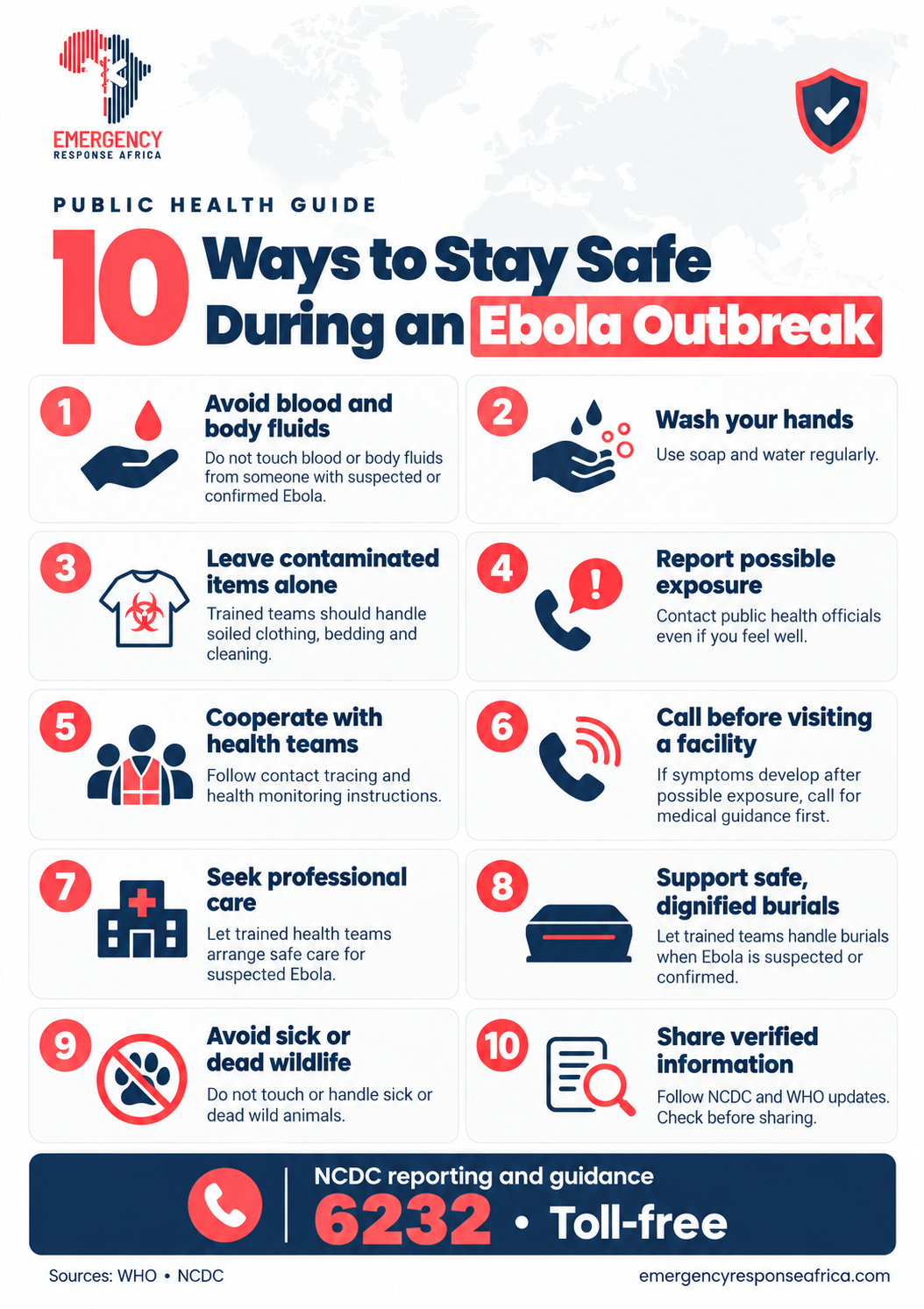
1) Avoid Direct Contact With Blood and Body Fluids From Someone With Suspected or Confirmed Ebola
If someone may have Ebola, avoid touching their blood, vomit, faeces or other body fluids. The risk is especially relevant when helping someone who is vomiting or has diarrhoea. Keep others away from contaminated areas and contact public health officials for help. You can support the person by making the call and following the health team’s instructions.
2) Wash Your Hands Regularly With Soap and Water
Wash your hands with soap and running water, including after using the toilet and before preparing food or eating. Make sure handwashing supplies are available at home and at work. WHO recommends regular handwashing during Ebola outbreaks, alongside measures that prevent contact with infected people and contaminated materials.
Handwashing does not make it safe to handle infected fluids without appropriate protection and training.
3) Leave Contaminated Clothing Bedding and Cleaning to Trained Teams
Do not pick up, shake out or wash clothing and bedding that may be contaminated by someone with suspected Ebola. Avoid cleaning their blood, vomit or other body fluids yourself. The NHS guidance on avoiding Ebola includes avoiding contaminated belongings. Ask the responding health team to arrange safe cleaning and handling.
4) Report Possible Exposure Even if You Feel Well
Call NCDC on 6232 if you believe you had contact with someone with suspected or confirmed Ebola, or with their blood, body fluids or contaminated belongings. Explain what happened and when. Feeling well at the time of the call does not remove the need for an exposure assessment.
Early reporting allows health teams to decide what monitoring or other precautions you need.
5) Cooperate With Contact Tracing and Health Monitoring
If a health team contacts you, provide accurate information about your movements and relevant contacts. Follow the monitoring instructions you receive and report symptoms promptly.
Contacts are generally monitored for 21 days after their last possible exposure. Let the health team determine the monitoring dates and any restrictions that apply to you. Keep your phone available so they can reach you.
6) Call for Medical Guidance Before Visiting a Facility if You Develop Symptoms After Possible Exposure
If you develop fever, severe weakness, vomiting or diarrhoea after possible exposure, avoid close contact with others and call public health authorities before travelling to a clinic or hospital. Explain your symptoms and exposure history at the start of the call.
Ask where you should receive care and how to get there safely. Calling ahead helps the receiving team prepare to protect you, other patients and staff. Seek guidance promptly; do not wait to see whether the illness becomes severe.
7) Arrange Professional Care for Someone With Suspected Ebola
Someone with suspected Ebola needs prompt assessment by a trained clinical team. Ask public health officials to coordinate appropriate care and any necessary transport. Ordinary household gloves or a face mask are not enough to make home nursing safe.
Early treatment can include fluids and management of complications. Avoid delaying assessment while trying unproven remedies or treating the illness as malaria without medical advice.
8) Allow Trained Teams to Conduct Safe and Dignified Burials
If someone dies with suspected or confirmed Ebola, contact the health authorities. Do not wash, dress or touch the body, or handle contaminated belongings yourself. The virus can remain infectious after death.
Trained burial teams can explain how the family can participate safely while respecting the person who has died. Discuss cultural or religious needs with the team rather than attempting preparations without protection.
9) Avoid Handling Sick or Dead Wild Animals
Do not touch, butcher or prepare wild animals found sick or dead, particularly bats and non-human primates. Avoid raw or undercooked wild-animal meat in areas affected by Ebola. Handling an infected animal can expose you before any cooking takes place.
This is a general precaution against animal-to-human transmission. It does not mean wildlife exposure caused the recently confirmed Nigerian case.
10) Follow Official Health Updates and Share Verified Information
Use NCDC’s official website and WHO updates to check changing advice. Before forwarding an outbreak message, check its source, location and publication date. A genuine report from a previous year may no longer describe the current situation.
Avoid circulating patients’ names, photographs or unverified claims about particular communities. Share practical guidance and reporting contacts instead. People are more likely to seek help when they can do so without being publicly blamed or exposed.
Treatment and Vaccines for Ebola
Treatment depends partly on the virus involved. Approved vaccines and specific antibody treatments exist for disease caused by Ebola virus, also known as Zaire Ebola virus. They should not be assumed to protect against Bundibugyo.
As of 21 October 2026, there is no approved vaccine or specific antiviral or antibody treatment for Bundibugyo virus disease. Test Candidates are being studied. However, patients can still receive supportive treatment, including fluids and care for complications, and early care can improve survival. WHO’s Ebola fact sheet explains the difference between available treatments and those still in development.
Preparing Your Home and Workplace
Make the reporting number easy to find. At work, agree who will contact health authorities if an employee reports possible exposure or becomes unwell, and how private health information will be handled. Ensure soap and water are available and that staff know where to find official updates.
At Emergency Response Africa, we help organisations assess their preparedness through emergency response planning. A clear plan gives staff a practical route for raising concerns and getting professional help. For suspected Ebola, the response must follow public health instructions and specialist infection-control procedures.
Conclusion
Staying safe during an Ebola outbreak depends on reducing exposure and acting promptly when there is a concern. Avoid infected body fluids, leave care and contaminated materials to trained teams, and cooperate with public health follow-up.
For possible Ebola exposure or a suspected case in Nigeria, call NCDC on 6232. If symptoms develop, call before visiting a healthcare facility.
For broader preparedness, our First Aid and CPR training helps individuals and teams prepare for common medical emergencies. You can contact Emergency Response Africa about training and preparedness for your household or organisation.