How Ogun R-MHET Improves Access to Emergency Care for Mothers and Babies
The Ogun State Government, in partnership with Emergency Response Africa (ERA), launched the Rural Maternal Health Emergency Transportation (R-MHET) programme to ensure that pregnant women and newborns in rural communities can access emergency care quickly and safely.
The initiative, piloted in Odeda Local Government Area, provides trained first responders, dependable transportation, and a modern dispatch system that connects mothers in distress to timely medical support. Supported by the Novartis Foundation, The Global Fund, and the Ogun State Ministry of Health, R-MHET reflects the state’s commitment to reducing maternal and infant deaths through innovation, collaboration, and strong community participation.
Challenge
Maternal and infant deaths remain a major public health concern in Nigeria. National data show more than 1,000 maternal deaths per 100,000 births and 67 infant deaths per 1,000 births. Ogun State has also recorded high maternal and under-five mortality ratios.
Behind these statistics are families affected by avoidable delays. In many rural communities, women struggle to reach hospitals quickly due to poor transportation, weak referral systems, and limited access to trained emergency responders. When complications arise during pregnancy or childbirth, these delays can be fatal for both mother and child.
Solution
To address these gaps, the Ogun State Government partnered with Emergency Response Africa to develop a simple, effective emergency response system focused on maternal and newborn health.
The programme features a community-based first responder network, a modern command centre, and enhanced ambulance services. Women in Odeda Local Government Area, where R-MHET first launched, receive free emergency transport vouchers—ensuring cost never stands in the way of care.
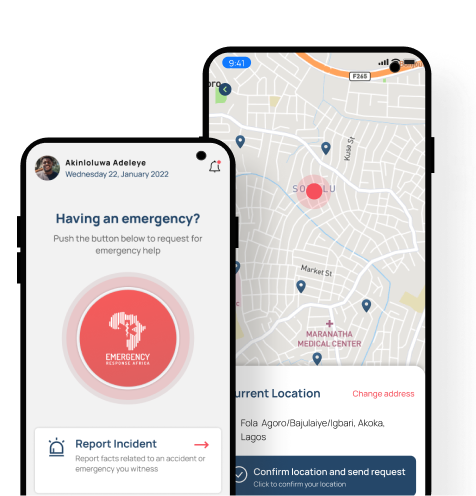
ERA’s dispatch platform connects women in distress with responders through USSD codes and text messages, enabling reliable communication even in low-connectivity areas. The initiative also includes healthcare worker training, public awareness, and strengthened referral systems to guarantee that patients are taken to the right facility at the right time.
Results
Since its introduction, R-MHET has improved access to emergency care for pregnant women in rural Ogun communities.
Ambulances now arrive faster, first responders provide immediate support within communities, and hospitals are better equipped to receive and stabilize patients.
These improvements are reducing delays, saving lives, and restoring trust in the healthcare system. Early indicators suggest fewer preventable maternal and infant deaths and stronger coordination between community clinics and referral hospitals.
USING TECHNOLOGY TO SAVE LIVES
Technology sits at the heart of R-MHET. Women can request help via a short code or SMS, and ERA’s GPS-enabled system instantly dispatches ambulances to their location. Hospitals receive real-time updates, allowing teams to prepare before the patient arrives. This seamless process ensures that care begins the moment an emergency is reported, not only upon arrival at the hospital.
AFFORDABLE ACCESS TO EMERGENCY CARE
The voucher system eliminates the financial barrier that often prevents rural women from accessing care during emergencies.
With support from the Novartis Foundation, The Global Fund, and the Ogun State Ministry of Health, women in Odeda LGA now enjoy free, reliable ambulance transport during childbirth complications. Plans are already underway to expand coverage to additional local governments, while the Ogun State Health Insurance Agency works toward ensuring long-term financial sustainability for the programme.
WHY THIS MATTERS
The Ogun R-MHET initiative marks a turning point for maternal and infant healthcare in Nigeria. It demonstrates how governments, global partners, and private innovators can work together to close critical gaps in emergency response and save lives. By combining training, technology, and transportation, Ogun State has created a replicable model for improving maternal health outcomes across Africa.
Conclusion
Maternal and infant deaths are not just statistics; they are preventable tragedies. The Ogun R-MHET program proves that with the right systems in place, no mother or child should lose their life due to delay or inaccessibility.
If you represent a government agency, health organization, or development partner seeking to strengthen maternal health in your region, now is the time to act.
Partner with Emergency Response Africa to build sustainable emergency systems that protect women and families when it matters most.
📩 Contact us at contact@emergencyresponseafrica.com to learn more.
Emergency help at the touch of a button.