It feels like we barely go a week without hearing about another fire outbreak in Nigeria. A market catches fire, a family loses their home, or an office goes up in flames. Behind each headline are people losing belongings, businesses, and years of hard work. For those without insurance, the cost of repairs or rebuilding makes recovery even harder.
A fire can start with something as small as a spark, a gas leak, or an unattended flame. So, what can you do to reduce the risk in your home or workplace? It starts with knowing what to look out for. In this article, we’ll explore the common causes of fire accidents in Nigeria and practical steps you can take to prevent them.
Major Causes of Fire Outbreaks in Nigeria
1. Electrical Faults
No one can do without electricity, but electricity can be so dangerous if not properly treated; it can become your worst enemy. Many fires in homes and offices come from bad wiring or overloaded sockets.
How to prevent it:
- Let a qualified electrician handle any wiring or repairs.
- Don’t plug heavy appliances like pressing iron, heater, or fridge into one socket.
- Unplug gadgets before sleeping or leaving the office.
- One small spark can start what nobody can stop.
2. Gas Leaks and Kitchen Fires
The sudden switch from kerosene stove to gas cylinder makes cooking faster, but it’s also a big fire risk. A small leak or forgotten pot is enough to destroy an entire kitchen.
How to prevent it:
- Check your gas cylinder and hose often (replace anything that looks old or cracked).
- Turn off the gas completely after cooking.
- Avoid taking calls or pressing your phone while cooking. Distraction causes mistakes.
3. Tanker Explosions
You’ve seen videos where a tanker falls, people rush to scoop fuel, and in seconds, everything is gone. That’s how many lives and properties are lost in Nigeria every year.
How to prevent it:
- Keep a safe distance from tankers, whether parked or moving.
- If you drive one, maintain it properly.
- Never go near a spill site, no matter how tempting it looks.
- The government and unions should keep enforcing safety rules.
4. Dry and Windy Weather During Harmattan
During Harmattan, dry grass and leaves catch fire easily, and also strong winds spread flames quickly. A small fire started to burn trash or clear a piece of land can get out of control and threaten nearby homes, shops, and farms.
How to prevent it:
- Avoid burning bushes on windy or dry days.
- Stay around to monitor the fire until it’s out.
- Clear the area around before lighting anything.
- Keep water or sand close in case it spreads.
5. Poor Storage of Flammable Items
Many people keep petrol or diesel in their homes, a small mistake that can cost everything. These materials are highly flammable and should be stored the right way.
How to prevent it:
- Use strong containers with labels.
- Keep them far from sunlight or flames.
- Store them in open, airy spaces.
- Never keep petrol inside the house
6. Solar Panel and Battery Fires
Solar systems are great, but fake products and poor wiring are a growing problem. A bad battery can explode or overheat and start a fire.
How to prevent it:
- Use trained solar installers, not random technicians.
- Buy quality batteries and panels from trusted dealers.
- Keep batteries in a cool place with enough ventilation.
- Don’t overload your inverter system.
7. Carelessness and Lack of Fire Safety Awareness
Sometimes, everyday habits create fire risks without us realizing it. Leaving candles unattended, forgetting food on the cooker, or throwing a lit cigarette into dry grass or rubbish can lead to a fire outbreak.
A lack of fire safety knowledge also plays a role. People sometimes overload electrical sockets, store fuel near heat sources, or ignore faulty wiring without understanding the danger. Learning to recognize these risks and taking action early can help keep your home or workplace safe.
How to prevent it:
- Don’t smoke or use fire near gas or petrol.
- Put out candles and stoves before sleeping.
- Keep your surroundings neat and free from flammable waste.
- Follow safety rules always, even when you’re in a hurry.
CONCLUSION
A fire accident can start in seconds, but the impact can sometimes last for years. Having an understanding of the common causes of fire accidents in Nigeria is the first step towards prevention. Simple habits, like fixing faulty wiring, turning off cooking gas after use, and storing fuel safely, can make a real difference. Make fire safety part of your everyday routine, and help share this article with people around you so they can also take precautions and know the right steps to take if they find themselves in a fire emergency.
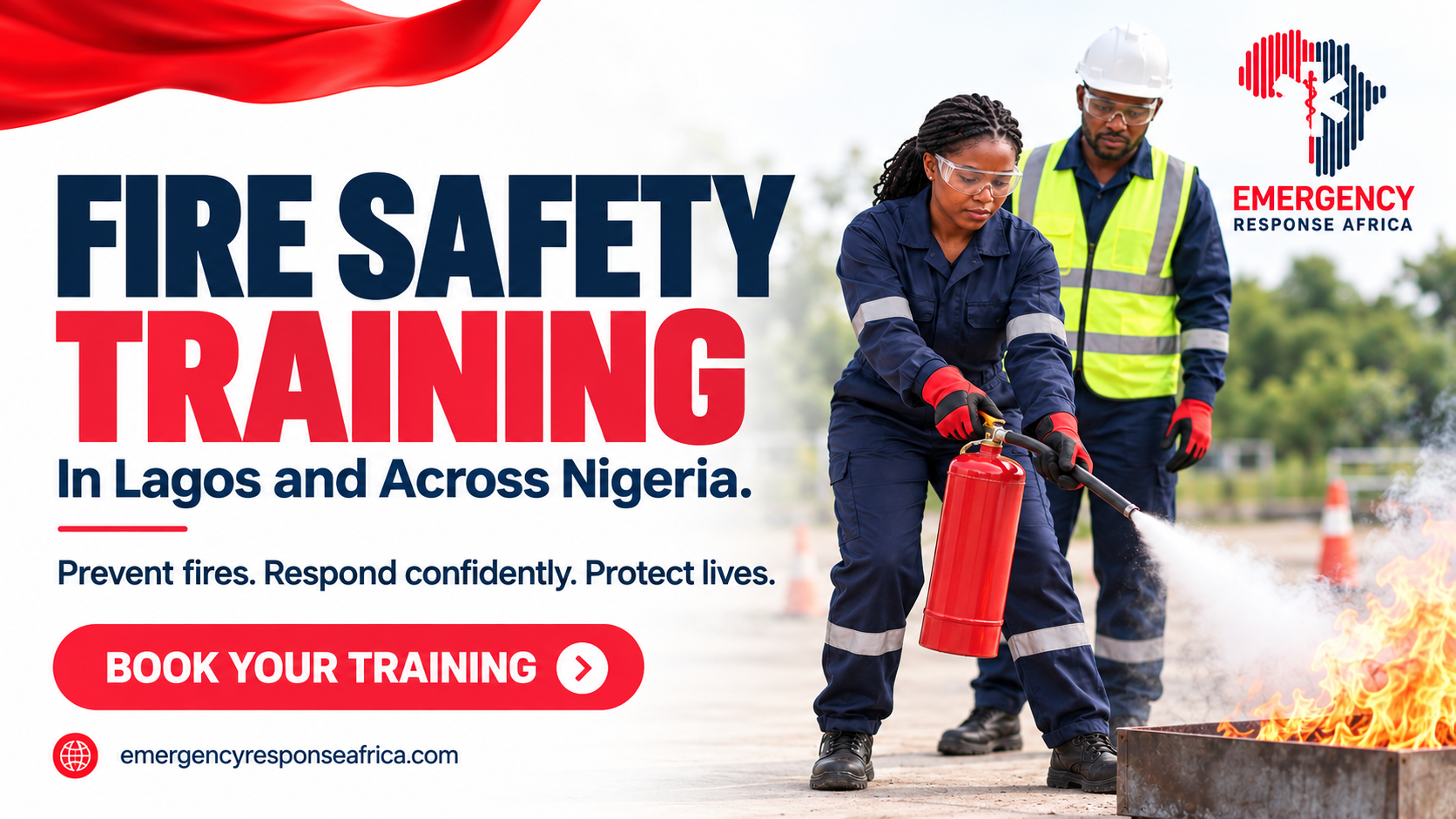
Fire Safety Training in Nigeria
Knowing what causes a fire is one thing. Knowing what to do when one breaks out is just as important.
Emergency Response Africa offers practical fire safety training in Lagos and other parts of Nigeria for individuals, businesses, and organisations. Our training helps participants recognise fire hazards, understand prevention measures, and respond safely during a fire emergency.
Help your team build the knowledge and confidence to stay safe. Learn more about our fire safety training and book a session.
FREQUENTLY ASKED QUESTIONS ABOUT CAUSES OF FIRE ACCIDENTS IN NIGERIA AND HOW TO AVOID THEM
What are the common causes of fire accidents in Nigeria?
Fire accidents can start from faulty wiring, overloaded sockets, gas leaks, unattended cooking, and careless use of candles or cigarettes. Unsafe fuel storage and uncontrolled bush burning can also put homes and businesses at risk.
How can faulty wiring and overloaded sockets cause a fire?
Damaged wiring and overloaded sockets can overheat or produce sparks that ignite nearby materials. Avoid connecting too many appliances to one socket, replace damaged cables, and get a qualified electrician to inspect electrical faults.
How can I prevent a fire accident in my home or workplace in Nigeria?
Start with everyday habits: avoid overloading sockets, keep flammable materials away from heat, and never leave cooking or candles unattended. Working smoke alarms can provide an early warning, while a clear escape plan helps everyone prepare to leave safely.
Where can I get fire safety training in Nigeria?
Emergency Response Africa offers practical fire safety training in Lagos and other parts of Nigeria for individuals, businesses, and organisations. Contact our team through the training page to discuss available sessions and arrange training for your location.
What will I learn during fire safety training?
You’ll learn how fires start, how to identify hazards, and how to reduce fire risks at home or work. ERA’s fire safety training also covers fire extinguisher use, evacuation procedures, and practical drills to help you respond safely during an emergency.
Do I need previous experience to attend fire safety training?
No. ERA’s fire safety training is beginner-friendly, so you can take part even if you’ve never attended a safety course or used a fire extinguisher before. The sessions combine clear explanations with practical exercises.