
Emergency Response Africa

About ERA

Our Impact

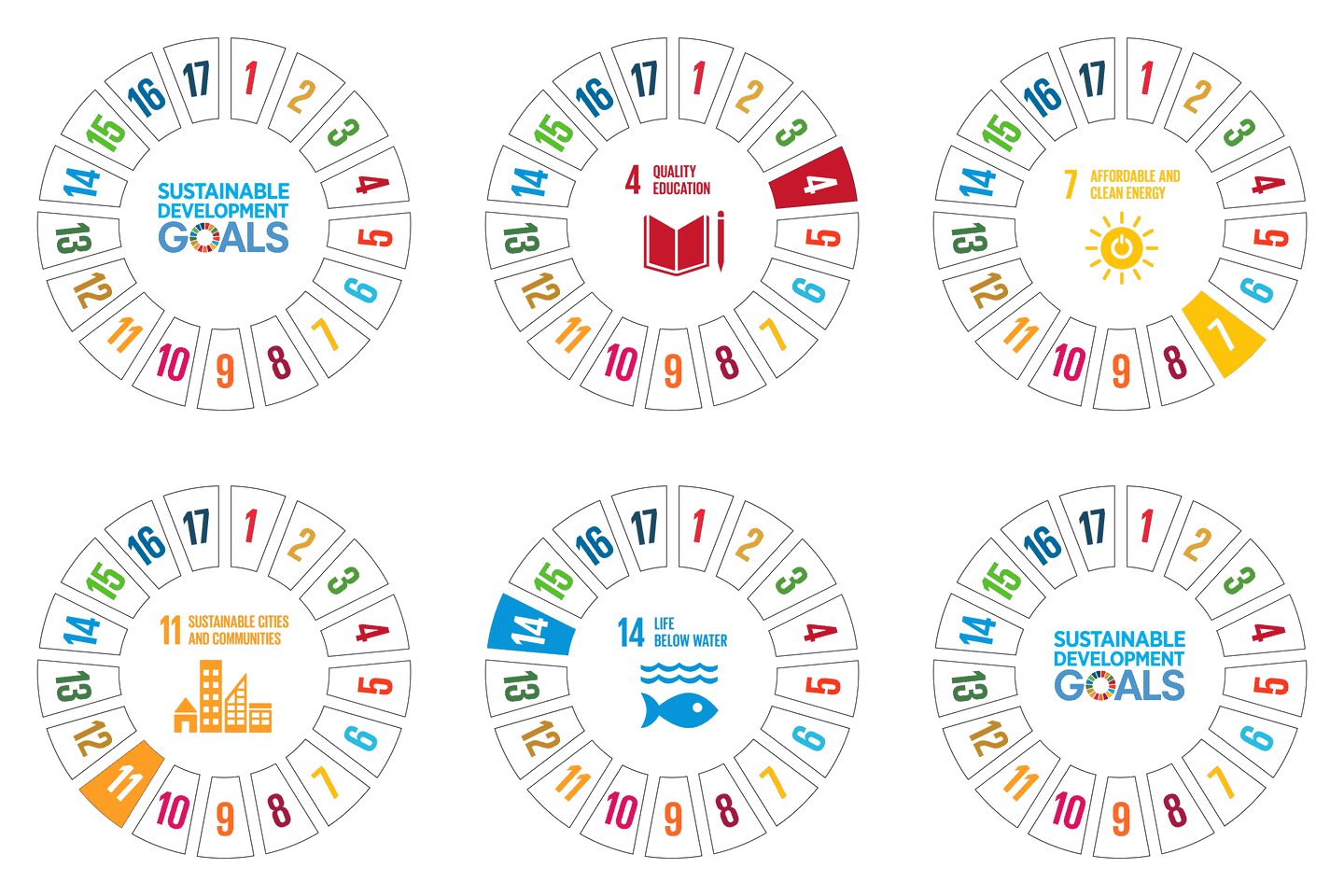
Emergency Response Africa partners with governments to establish and operate effective emergency services through public-private partnerships and technical collaborations to achieve SDG 3 -[Good Health and Wellbeing], while also contributing to SDG 8 – [Decent Work and Economic Growth], and SDG 17 – [Partnership for the Goals].

State of Emergency Medical Service in Nigeria

Millions of Nigerians face life-threatening situations every day with little to no access to timely emergency services. Watch this BBC Africa and Channels TV feature to see the urgent need for change.

Helping Africa achieve the Sustainable Development Goals

Every year, millions of Africans are lost to preventable death caused by sudden illnesses, road accidents, and trauma. In addition to the widespread impact of communicable diseases like malaria and diarrhea, the growing prevalence of “silent” non-communicable diseases like diabetes, cardiovascular diseases, chronic respiratory conditions, and cancer is putting more people at risk of sudden illness and preventable deaths. Research indicates that more than half of all deaths that occur in lower middle income countries can be prevented through timely emergency response.

Unfortunately, less than 9% of the African continent is covered by formal emergency medical services systems.Where these systems exist, just 3 out of 100 citizens call for help in an emergency, choosing instead to take matters into their own hands, because they are not sure that the system is reliable. As African governments move to deliver Universal Health Coverage and achieve the Sustainable Development Goals, emergency response offers an important solution for improving access to care.

How we are helping Africa achieve the SDGs

Our technology-enabled emergency response solution is contributing significantly to the achievement of SDG 3 – Good health and wellbeing. Learn more about the targets we are contributing to.
  • Global maternity mortality

    Reduce the global maternal mortality ratio to less than 70 per 100,000 live births

  • Reduce neonatal mortality

    End/Reduce neonatal mortality to at least as low as 12 per 1,000 live births and under-5 mortality to at least as low as 25 per 1,000 live births

  • Global deaths and Injuries

    Halve the number of global deaths and injuries from road traffic accidents.

  • Universal health coverage

    Achieve universal health coverage, including financial risk protection, and access to safe, effective, affordable and quality essential health-care services

  • Hazardous chemicals and air

    Substantially reduce the number of deaths and illnesses from hazardous chemicals and air, water and soil pollution and contamination.

  • Health workforce

    Substantially increase health financing and the recruitment, development, training and retention of the health workforce in developing countries, small island developing States.

  • Health risk capacity

    Strengthen the capacity of all countries, in particular developing countries, for early warning, risk reduction and management of national and global health risks.

Global maternity mortality

Reduce the global maternal mortality ratio to less than 70 per 100,000 live births

Reduce neonatal mortality

End/Reduce neonatal mortality to at least as low as 12 per 1,000 live births and under-5 mortality to at least as low as 25 per 1,000 live births

Global deaths and Injuries

Halve the number of global deaths and injuries from road traffic accidents.

Universal health coverage

Achieve universal health coverage, including financial risk protection, and access to safe, effective, affordable and quality essential health-care services.

Hazardous chemicals and air

Hazardous chemicals and airSubstantially reduce the number of deaths and illnesses from hazardous chemicals and air, water and soil pollution and contamination.
Health workforce

Substantially increase health financing and the recruitment, development, training and retention of the health workforce in developing countries, small island developing States.

Health risk capacity

Strengthen the capacity of all countries, in particular developing countries, for early warning, risk reduction and management of national and global health risks.

By also contributing to the development of the paramedic workforce and fostering stronger relationships between public and private sectors, we also contribute to the achievement of SDG 8 – Decent Work and Economic Growth, and SDG 17 – Partnership for the Goals.

Public Sector Partnerships

Rural Maternal Health Emergency Transportation (R-MHET) Documentary

Edo EMS Documentary

Theory of Change

Effective emergency medical services
is a tool for economic growth

How we make our impact

The Inputs

The Inputs

How we make our impact

The Outputs

The Outputs

How we make our impact

The Outcomes

The Outcomes

FAQ

When you call our toll-free emergency number (0 8000 2255 372), you are immediately connected to a trained medical dispatcher. The dispatcher will assess the situation (triage) and quickly connect you with the nearest available emergency responders, including paramedics, ambulances, and medical professionals. We ensure on-site treatment and, where necessary, safe transport to a verified emergency-ready hospital.
Most health insurance plans only begin to cover your care once you arrive at the hospital. Emergency medical cover ensures that you get the urgent care you need before you reach the hospital, from dispatching an ambulance to stabilizing you on-site, and getting you to the right facility fast. It bridges the gap between the incident and hospital care, which can be life-saving.
Yes! Our emergency toll-free number (0 8000 2255 372) is available 24/7, every day of the week. No matter the time or day, help is just one call away.
Emergency Response Africa (ERA) offers a connected emergency care system, not just an ambulance. Unlike traditional ambulance services, ERA coordinates the entire emergency response process from real-time dispatch, triage, on-site care, to hospital coordination. Our growing network of verified responders and hospitals ensures faster, smarter, and more reliable care when minutes matter most.
No, ERA is a social enterprise, a for-profit company committed to solving critical healthcare challenges and saving lives. Our mission is to ensure fast and reliable emergency care across Africa.

Contact Us

Want to learn more about
our emergency response services?