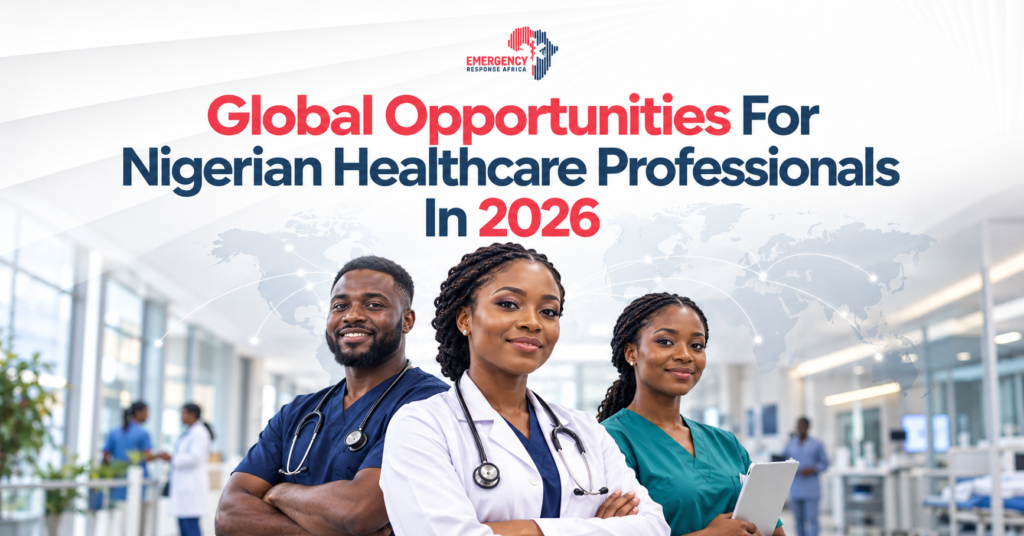
As the year is coming to an end, many Nigerian healthcare professionals are looking ahead to the next stage of their careers. For some, that means better pay or a chance to specialise. For others, it means exploring opportunities abroad and gaining international experience. If you’re considering a similar move, start by knowing where to look and how to prepare.
Working abroad takes more than finding a vacancy. You need to know where your qualifications are recognised, what employers expect, and how to prepare for the role you want. As a nurse, midwife, pharmacist, or allied health professional, understanding these requirements can help you turn your career goals into a practical plan.
In this article, we’ll explore global career opportunities for Nigerian healthcare professionals, destinations to consider, and the steps you can take towards your next move.
Why There is Demand for Healthcare Professionals (Global Workforce Gap)
The factors driving demand include ageing populations, rising chronic disease burdens, post-pandemic burnout, and increasing healthcare infrastructure worldwide.
Multiple analyses confirm that the shortage of healthcare professionals is not just temporary; for instance, in the European Union region, an estimated 1.2 million additional healthcare professionals are needed in 2025.
For Nigerian healthcare professionals, this global landscape translates into real possibility, meaning your skills are in demand, and globally oriented recruitment pathways are opening wider.
Global Regions Where Nigerian Healthcare Professionals Can Work
If you’re considering a healthcare career abroad, these regions are worth exploring. Each has its own entry requirements, career benefits, and factors to consider before making your move.
1) Europe
Europe remains a prime destination; the EU’s 1.2 million figure underscores the scale of demand. Countries like Germany, Ireland, Austria, Denmark, and the Netherlands are among the top nations seeking healthcare workers. Making it possible for Nigerian professionals with roles in nursing, midwifery, allied health, and healthcare support to have an edge globally.
2) Middle East & Gulf Region
The Gulf countries (for example, the UAE, Saudi Arabia, and Oman) continue to expand healthcare hiring. Nigerian professionals, with roles in nursing, midwifery, allied health, and healthcare support, have an edge globally to work in private hospitals and large healthcare networks.
This region offers tax-free salaries (in certain areas), rapid hiring cycles, and attractive relocation benefits.
3) North America & Canada
The United States and Canada still show strong demand for foreign-educated nurses and healthcare professionals. In the U.S., despite some slowing of new visa applications, demand remains elevated. Nigerian Healthcare Professionals are at the advantage of the potential for permanent residency, high professional standards, and advanced career development.
4) Other Emerging Regions
There are several other global opportunities Nigerian healthcare professionals can leverage, such as parts of Asia-Pacific and some African nations. Advantages: less competition in certain roles, possibility of stepping-stone experience abroad.
What Nigerian Healthcare Professionals Should Do to Prepare
Here are essential preparation steps:
- Verify credentials and registration
- Ensure your nursing/midwifery or allied health qualifications from Nigeria are recognised internationally.
- Keep an updated record of your professional registration (e.g., with the Nursing & Midwifery Council of Nigeria if applicable), along with continuous professional development evidence.
- Assess language and local requirements
- Even if English is sufficient, many countries may require a proficiency test or proof of ability to work in English.
- For non-English speaking destinations, consider whether the local language (e.g., German, Dutch, French) is needed and whether training is available.
Selecting Your Target Country and Role
- Determine your preferred destination based on language comfort, career goals, lifestyle, contract type, and relocation support.
- Consider professional roles in demand (nurse, midwife, physiotherapist, caregivers, pharmacist, etc.) in your chosen market.
- Confirm job offer authenticity, contract terms, salary, benefits, and visa/work-permit sponsorship.
- Prepare your documentation and visa/work permit process
- Have certified copies of degrees, transcripts, registration/licence, letters of experience, passport, and medical/fitness certificates if required.
- Understand the visa route, processing time, and whether the employer provides sponsorship or relocation support.
Conclusion
For Nigerian healthcare professionals, the global labour market presents significant and varied opportunities. Whether you are a nurse, midwife, technician, or allied health worker, your skills are in demand around the world.
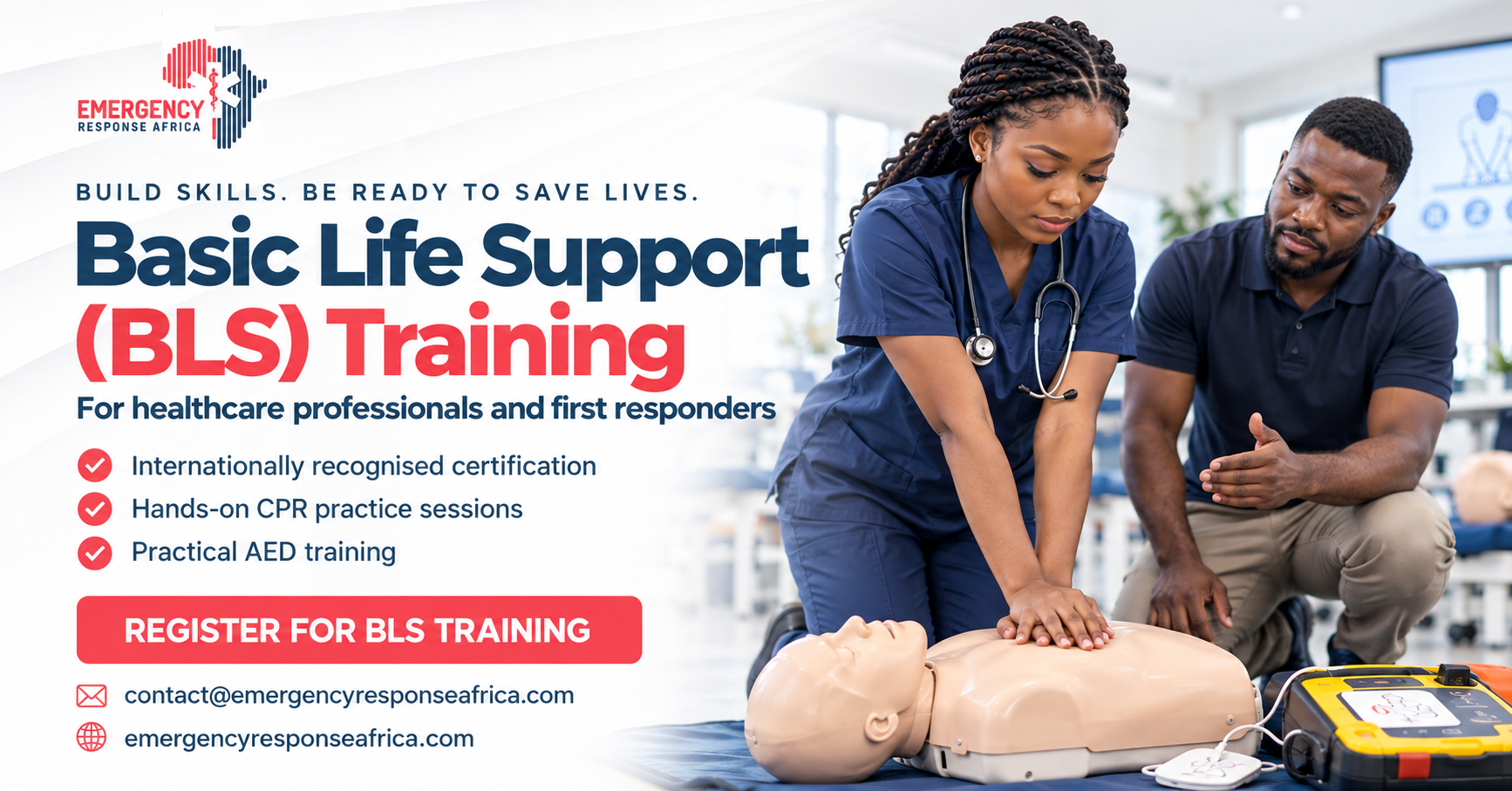
Preparing for your next career move also means keeping your emergency response skills sharp. Emergency Response Africa offers Basic Life Support (BLS) and other internationally recognised training programmes to help you build practical skills, strengthen your professional credentials, and respond confidently to emergencies. Email contact@emergencyresponseafrica.com to learn about upcoming sessions and book your training.