
No one plans to get sick or injured while travelling, but it happens. A scraped knee on a hike, a sudden fever in a remote town, or food poisoning mid-journey can quickly ruin your trip. That’s why a travel first aid kit isn’t just nice to have, it’s a must-pack essential.
Too often, people toss in a few pills and plasters without thinking it through. But smart travellers know that real emergencies need more than guesswork. A properly packed first aid kit gives you the supplies to act fast, stay safe, and avoid unnecessary hospital visits, especially in places where medical help may be far or limited.
This guide shows you how to pack a travel-ready kit that covers common health issues, adapts to different types of trips, and fits neatly in your luggage. Whether you’re exploring a rural village or flying across borders, the right preparation is of utmost importance.
Why Every Traveler Needs a First Aid Kit
Travel exposes you to new places, climates, foods, and routines—all of which can challenge your health in unexpected ways. Even a minor issue like a blister or headache can become a major discomfort when you’re far from home and unfamiliar with local healthcare options.
Here’s why packing a first aid kit should be non-negotiable:
- Having essential supplies on hand allows you to act quickly before professional help arrives or while waiting to reach a clinic.
- Limited access to care, especially in remote areas, nature trails, or unfamiliar cities, can make it hard to find a pharmacy, particularly after work hours or on weekends.
- Language and cultural barriers when traveling abroad can make it difficult to explain your symptoms or request medication, but a personal kit helps bridge that gap.
- Most store-bought kits may not have personal essentials like allergy meds, baby supplies, or motion sickness tablets.
- Buying health items on the go can be expensive, so making a personal kit is a more cost-effective option.
How to Pack the Right Travel First Aid Kit (Step-by-Step Guide)
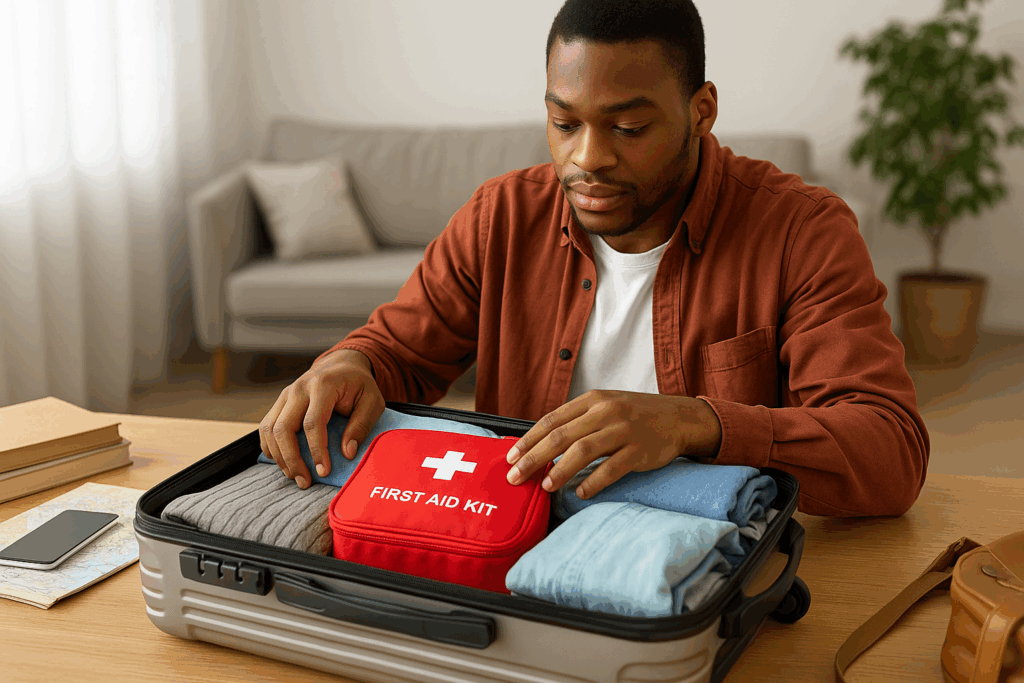
Your destination, travel style, and personal health needs should all shape what goes into your kit. There’s no one-size-fits-all when it comes to staying safe on the road. A weekend city escape needs far less than a two-week jungle trek, but both deserve proper planning.
Let’s break it down step by step so you pack smart and stay ready
1. Assess Your Destination and Travel Needs
Are you heading to a beach resort, a mountain trail, a rural village, or a city abroad?
Your destination determines what goes in your kit. High-altitude hikes may call for altitude sickness tablets. Trips to tropical regions might require insect bite care and oral rehydration salts. For city tours, focus on blisters, motion sickness, and mild pain relief.
Also consider:
- Local climate and terrain
- Access to clean water
- Availability of nearby pharmacies or clinics
- Whether you’re travelling with children, seniors, or someone with a chronic condition
2. Choose the Right Storage Bag
Use a lightweight, weather-resistant pouch that keeps your first aid items neat and ready. Pick something compact enough for carry-ons but roomy enough to hold all your essentials. Soft cases are ideal for city travel, while hard cases work better for rugged or remote trips.
Make sure your bag:
- Is durable and easy to wipe clean
- Has see-through compartments or color-coded pouches
- Fits comfortably in your luggage or daypack
- Zips open fully so you can quickly find items during an emergency
Choose function over fancy; your kit should be easy to use, even under pressure.
3. Stock Basic First Aid Essentials
Every first aid kit for travel emergencies should include a core set of items that address the most common injuries and minor illnesses you may face on the road. These basics help you treat scrapes, burns, fevers, and digestive issues—quickly and safely.
Here’s a list of essential items to include:
Wound Care Supplies
- Adhesive bandages (various sizes)
- Sterile gauze pads and medical tape
- Antiseptic wipes or solution (e.g., chlorhexidine or alcohol-free options)
- Antibiotic ointment (like bacitracin or fusidic acid)
- Tweezers and blunt-tip scissors
- Blister plasters (great for hikers and walkers)
Medication Essentials
- Paracetamol and ibuprofen (for pain, fever, or inflammation)
- Antihistamines (for allergies, insect bites, or rashes)
- Antacids or anti-diarrhoea meds (e.g., loperamide)
- Oral rehydration salts (especially for hot climates or stomach bugs)
- Motion sickness tablets
- Mild laxatives (in case of constipation during travel)
Other Key Items
- Thermometer (preferably digital and travel-sized)
- Hand sanitizer
- Medical gloves (non-latex)
- Cotton swabs and balls
- Safety pins
- Emergency contact card and any personal medical information
Tip: Group items into ziplock bags or labeled pouches (e.g., “Pain Relief,” “Wound Care”) to keep everything organised and accessible.
4. Include Destination-Specific Items
Not all trips are the same, and your first aid kit should reflect where you’re going, how long you’ll be gone, and what activities you have planned. A kit for hiking in Jos will look different from one packed for a beach holiday in Zanzibar or a business trip to London.
Tailor your kit with these destination-based add-ons:
For Tropical or Remote Areas:
- Insect repellent (with DEET or picaridin)
- Anti-malarial medication (prescribed, if required)
- After-bite or anti-itch cream
- Water purification tablets or a portable filter
- Extra oral rehydration salts
- Sunburn gel or aloe vera
For Cold Climates:
- Lip balm and moisturiser to prevent dry skin
- Thermogenic patches or heat packs
- Cold relief meds (e.g., decongestants)
For Adventure or Outdoor Trips:
- Elastic bandage wrap (for sprains)
- Burn cream or gel
- Instant cold packs
- Whistle or emergency thermal blanket
- Tick removal tool (for forest or mountain areas)
For International Travel:
- Proof of vaccination (yellow fever, COVID-19, etc.)
- Copies of prescriptions for controlled meds
- Language cards or apps for medical translation
- A universal health insurance card or contact info
Packing based on your location not only makes your kit more effective, but it also ensures you’re not scrambling to find local alternatives that may be hard to access or unfamiliar.
5. Add Personal Medications and Essentials
Beyond general supplies, your first aid kit should include medications and items tailored to your personal or family health needs. Forgetting these can leave you stranded, especially in areas with limited pharmacies or unfamiliar drug brands.
Pack these personal essentials:
- Daily prescription medications (e.g., blood pressure, asthma, diabetes) — carry enough for the full trip plus extra days in case of delays.
- Allergy treatments — antihistamines or epinephrine auto-injector (EpiPen) if you have a history of severe allergic reactions.
- Motion sickness relief — tablets, wristbands, or patches for long drives or boat rides.
- Menstrual supplies — sanitary pads, tampons, menstrual cups, and any medication for cramps.
- Eye care — lubricating eye drops, contact lens solution, and a backup pair of glasses.
- Baby care items — infant paracetamol, teething gel, baby-safe bug repellent, or formula-related meds if traveling with a baby.
Tip: Keep personal medications in their original labeled packaging to avoid issues with airport security or border control. Also, include a copy of your prescription, especially for controlled substances.
6. Review and Restock Regularly
A travel first aid kit isn’t something you pack once and forget. Medications expire, supplies get used up, and your health needs may change between trips. Before every journey, open your kit and check for expired items, damaged packaging, and missing essentials.
Replace anything that’s running low or no longer suitable, like switching from children’s medicine to adult doses as your kids grow. It’s also a good time to update personal prescriptions and ensure your emergency contact card is still accurate. A quick restock now can save you from stress or serious complications later, especially in places where getting a replacement may be difficult.
Conclusion
Whether you’re headed across the state or around the world, a well-packed travel first aid kit gives you peace of mind. It helps you take charge when unexpected health issues arise, and keeps minor problems from turning into major emergencies.
Ensure that you tailor your kit to your destination, stock the right supplies, and check it before every trip to stay one step ahead.
Emergency Response Africa offers more than tips; we provide real-time support and emergency access when it matters most. Need help building the perfect travel kit, or want first aid training before your next trip? Reach out to us at contact@emergencyresponseafrica.com to get started.