Lagos traffic is legendary for all the wrong reasons. With a population of over 20 million, more than 1.6 million vehicles on the roads daily, and narrow, often overstretched roadways, the city’s gridlock is a daily crisis.
The average commuter in Lagos spends over 3 hours in traffic every day, leading not only to lost time but also dangerous delays in accessing emergency medical care. For years, this traffic has stood between patients and the urgent care they need. That’s where motorcycle first responders step in.
Unlike conventional ambulances that get stuck in traffic, motorcycle medics are designed to weave through gridlock and reach patients in distress quickly, delivering lifesaving care right at the scene. It’s a system built for the realities of Lagos.
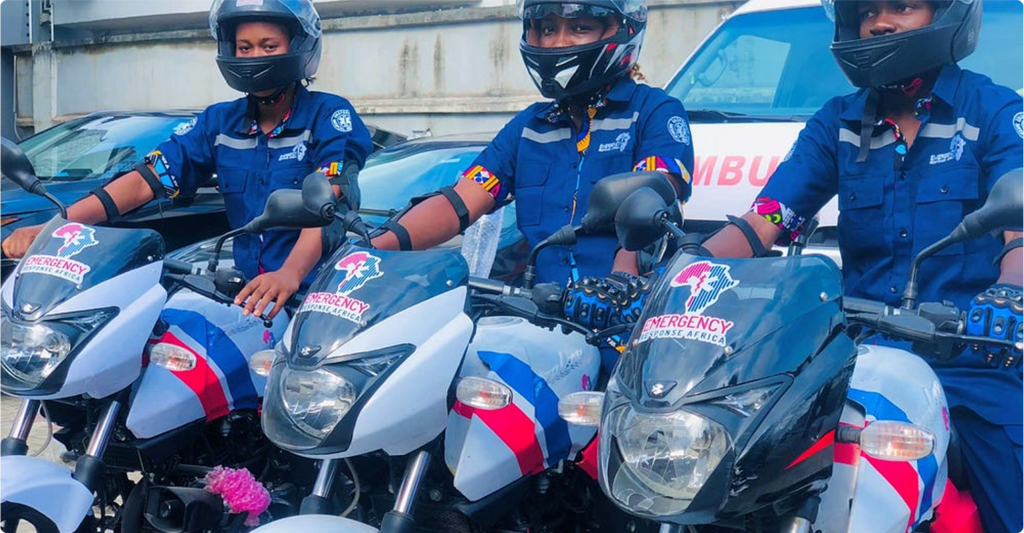
Emergency Response Africa (ERA) is one of Nigeria’s leading EMS providers, pioneering this approach, deploying trained responders on motorcycles to significantly cut response times and improve patient outcomes.
This article explores how motorcycle ambulances work in Lagos, with a closer look at ERA’s ground-breaking approach to first responder care.
What Is a Motorcycle Ambulance?
A motorcycle ambulance is a two-wheeled rapid-response vehicle operated by trained paramedics. Unlike traditional ambulances, it is not meant to transport patients. Instead, it allows medical professionals equipped with essential life-saving tools to reach patients quickly, often much faster than standard ambulances stuck in traffic.
At Emergency Response Africa (ERA), these motorcycle medics are a vital part of the Medical First Responder Service, delivering timely care at the scene of an emergency.
How motorcycle medics differ from a traditional ambulance:
| Feature | Motorcycle Medic Response | Traditional Ambulance |
| Primary goal | Arrive fast and stabilise on the scene | Treat en route and transport |
| Crew | 1 advanced EMT/paramedic who is also a certified rider | 2-3 clinicians (driver + EMT/paramedic) |
| Equipment | Mini-trauma kit, AED, O₂, airway tools, bleeding-control supplies | Full stretcher bay, IV setup, larger drug cabinet |
| Average size/weight | ≤ 250 kg; width < 1 m | ≥ 3 t; width ≈ 2.2 m |
| Best use-case | Dense traffic, narrow roads, and first contact in mass-casualty | Patient transport, advanced in-transit care |
Inside the Motorcycle First Responder Kit
Each ERA motorcycle responder isn’t just riding fast; they’re riding fully equipped. These compact medical units carry essential tools designed to stabilize patients quickly and effectively at the scene of an emergency.
Despite the limited space, the medical kits are carefully curated to address the most time-critical conditions such as cardiac arrest, major bleeding, respiratory distress, and trauma injuries.
Here’s what you’ll typically find on an Emergency Response Africa motorcycle ambulance:
- Automated External Defibrillator (AED): For delivering life-saving shocks in cases of sudden cardiac arrest.
- Trauma Kit: Includes bandages, gauze, splints, tourniquets, and dressings to stop bleeding and support injured limbs.
- Portable Oxygen Cylinder and Mask: For patients struggling to breathe due to asthma, shock, or injury.
- Airway Management Tools: Such as oropharyngeal airways and bag-valve masks to support unconscious or semi-conscious patients.
- Basic Medications: Emergency drugs for allergic reactions, pain relief, or diabetic hypoglycemia (depending on the responder’s scope of practice).
- Vital Sign Monitoring Tools: Including a pulse oximeter, blood pressure cuff, and thermometer.
- Personal Protective Equipment (PPE): Gloves, face shields, and sanitizers for infection control and safety.
- Communication Equipment: Two-way radios or mobile dispatch apps to maintain real-time communication with the ERA command center and coordinate with ambulance teams.
Each motorcycle is handled by a trained EMT or paramedic, skilled in trauma care, CPR, and rapid patient assessment. These professionals can make critical decisions and administer urgent care on the spot, well before the ambulance even arrives.
How the Motorcycle First Responder System Works
Emergency Response Africa (ERA) uses a tech-driven model to deploy its motorcycle first responders, trained professionals who are always ready, rain or shine.
Here’s how the system works in real-life situations:
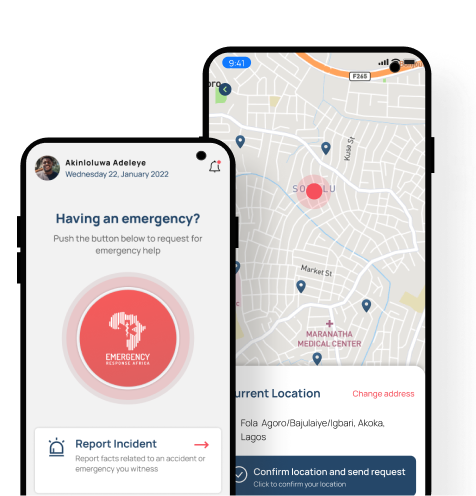
- Emergency Call or Alert Received: A medical emergency is reported through ERA’s toll-free line (08000-2255-372) or via the Emergency Response Africa mobile app.
- Location and Severity Are Assessed: The ERA dispatch team uses GPS and caller information to determine the patient’s exact location and the nature of the emergency.
- Nearest Motorcycle Responder Is Deployed: If traffic congestion poses a risk to quick ambulance arrival, a trained first responder on a motorcycle is immediately dispatched from the closest hub.
- On-Site Care Begins in Minutes: The motorcycle medic weaves through traffic and arrives at the scene, often in under 10 minutes. They begin lifesaving interventions: CPR, bleeding control, oxygen support, or seizure management, depending on the case.
- Ambulance Dispatch (If Needed): If the situation requires hospital transport, a conventional ambulance is dispatched simultaneously or shortly after, depending on severity. The responder stays with the patient and hands over care when the ambulance arrives.
- Real-Time Coordination and Follow-Up: ERA’s command center stays in touch with both the on-site responder and the ambulance crew, ensuring a smooth handoff and continuous care until the patient reaches the hospital.
This model blends speed, technology, and skilled medical care, all tailored to Lagos’s urban challenges. It’s a system that ensures help arrives when and where it’s needed most, even in the most congested areas.
Key Features of ERA’s Motorcycle Response Model
Lagos doesn’t just need emergency medical services; it needs an EMS model built for its complexity. Between tight urban settlements, unpredictable traffic patterns, and high population density, traditional ambulance systems face serious limitations. That’s where Emergency Response Africa’s motorcycle first responder model proves uniquely effective.
Here’s what sets it apart and why it works so well for Lagos:
1. 24/7 Availability
ERA stations trained responders across multiple hotspots in Lagos, especially in areas with heavy traffic, large crowds, or higher emergency risk. These riders are always on standby, ready to respond at any time of day or night. This helps reduce delays and gets help to people faster.
2. Real-Time, GPS-Driven Dispatch
As soon as an emergency is reported, ERA’s command center uses GPS to find the caller’s location and quickly sends the closest available responder. This fast, tech-based system makes it easier to reach people quickly, even in traffic.
3. Highly Trained Dual-Skilled Responders
Each rider is trained in both medical care and expert motorcycle riding. They know how to handle emergencies like trauma, CPR, airway issues, and bleeding. This means they can start treatment as soon as they arrive.
4. Traffic-Defying Response Times
Motorcycles can get through traffic and narrow roads that slow down regular ambulances. This often allows responders to reach the scene in less than 10 minutes, which is critical for saving lives.
5. On-Scene Focus
These responders don’t transport patients; they treat them on the spot. Their job is to stabilize the patient right there, buying time until an ambulance arrives if needed. Whether it’s stopping bleeding, giving oxygen, or restarting a heart, care begins immediately.
Proven Benefits: Speed & Survival
Lagos isn’t the first megacity to discover that two wheels beat four when every second counts. In Bangkok, Thailand, motorcycle paramedics regularly beat the eight-minute resuscitation target, the threshold for effective cardiac arrest response, while traditional ambulances often fall short.
In one study, Thai “motorlances” carrying defibrillators activated within 0.44 minutes and reached patients in just 7.2 minutes on average, significantly faster than the 9.25 minutes posted by conventional ambulances. They helped sustain 88.9% of resuscitations en route to hospitals.
Similar success stories have emerged from India and Latin America, where motorcycle medics have drastically cut response times, especially in narrow alleys or high-density neighborhoods. While precise statistics vary, all reports underscore the same truth: faster care saves lives.
That same principle now drives Emergency Response Africa in Lagos. Since launching its Motorcycle Medic Response, ERA medics have routinely reached emergencies in under 10 minutes, delivering critical care before standard ambulances can arrive. Video footage like “Emergency Care at Its Finest” shows medics performing lifesaving interventions, CPR, bleeding control, and oxygen administration right at the scene.
Final Thoughts
Motorcycle first responders are trained to handle a wide range of medical emergencies, but they’re not a replacement for full ambulance services. Instead, they’re the bridge, the crucial first link in the chain of survival.
But the potential goes beyond speed. Motorcycle medics signal a shift in how we think about emergency care: localised, responsive, agile. This model can serve as a blueprint for other African cities facing similar urban challenges.
At Emergency Response Africa, we’re not just reacting to emergencies but building a system that works for real life in Nigerian cities.
If you or your loved ones are facing a medical emergency, no matter the time, place, or traffic, call ERA’s toll-free line at 08000-2255-372. Help will get to you in minutes. Email contact@emergencyresponseafrica.com for more information.